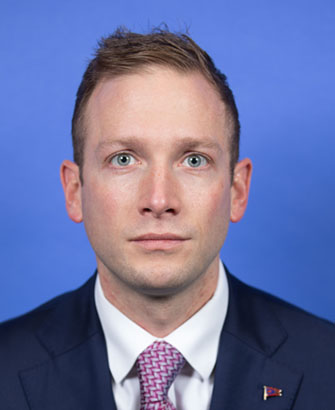
Congressman Max Miller is pushing for National Guard deployment in Cleveland to address violent crime, despite opposition from state and local officials and the fact that Cleveland is not part of his congressional district.
The Republican congressman published an op-ed calling for military troops to patrol city streets, arguing that local law enforcement needs additional support to combat rising violence. However, his proposal has been rejected by Governor Mike DeWine and criticized by Cleveland city officials.
State and Local Officials Reject Proposal
Governor DeWine dismissed Miller’s National Guard request during a recent press conference. “We don’t see the need for that type of deployment at this time,” DeWine said, noting that existing law enforcement partnerships are already addressing violent crime in the city.
Cleveland Mayor Justin Bibb’s office responded that the city is already working with federal agencies on joint operations targeting violent offenders. City council members called the proposal unnecessary, with several pointing out that Miller’s 7th Congressional District does not include Cleveland.
“This appears to be more about generating headlines than addressing our actual public safety needs,” said Cleveland City Councilwoman Blaine Griffin.
Legal and Practical Concerns
Legal experts note that the Posse Comitatus Act generally prohibits military personnel from acting in law enforcement roles within the United States. Exceptions typically require specific circumstances and proper authorization through established chains of command.
The 2020 military deployment in Washington D.C. during civil unrest resulted in multiple lawsuits alleging constitutional violations and excessive force. Several of these cases remain in federal court.
“Military personnel receive different training than police officers,” said Ohio State University law professor Sarah Chen. “They’re trained for combat situations, not community policing or constitutional law enforcement.”
Current Crime Statistics and Responses
According to Cleveland Police Department data, violent crime rates have fluctuated over the past several years, with some categories showing increases while others have declined. The city has implemented several evidence-based crime reduction strategies, including focused deterrence programs targeting repeat offenders.
Cleveland currently participates in federal task forces with agencies including the FBI, DEA, and ATF. These partnerships have resulted in numerous arrests and seizures of illegal weapons and drugs over the past year.
The city has also expanded its witness protection programs and increased funding for community violence intervention programs, according to city budget documents.
Ohio’s Statewide Rankings
Recent state rankings show Ohio performing below national averages in several key areas. U.S. News & World Report ranked Ohio 38th overall in its 2025 Best States rankings, down from higher rankings in previous years.
The state ranked 39th in economy, 34th in healthcare, 38th in education, 30th in infrastructure, 30th in crime and corrections, and 41st in natural environment. In 2010, Ohio ranked 8th in economic performance and 5th in education.
State budget documents show reductions in funding for education and social services over the past decade, though officials cite economic constraints and changing priorities.
Political Context
Miller’s proposal comes as he prepares for his 2026 reelection campaign. The congressman has made public safety a central theme of his political messaging, frequently discussing crime rates and law enforcement support at campaign events.
Campaign finance records show Miller has raised significant funds from donors who prioritize law-and-order issues. His recent fundraising appeals have highlighted his tough-on-crime positions.
Miller’s office did not respond to requests for comment about specific details of his National Guard proposal, including projected costs, duration, or measurable objectives.
Expert Analysis
Crime policy experts say effective violence reduction typically involves multiple strategies implemented over time. Research indicates that successful programs often combine targeted law enforcement with community investment, education improvements, and social services.
“Quick fixes rarely work with complex social problems,” said Dr. Michael Rodriguez, who studies crime policy at Case Western Reserve University. “Sustainable crime reduction requires sustained investment in multiple areas, not just increased law enforcement presence.”
California recently enacted legislation restricting when law enforcement officers can wear face coverings during operations, citing concerns about accountability and community relations.
Next Steps
Miller has indicated he plans to continue advocating for increased federal involvement in Cleveland’s public safety efforts. However, without support from state and local officials, any National Guard deployment would face significant legal and practical obstacles.
The Ohio General Assembly would likely need to approve any state-funded expansion of law enforcement resources, and federal involvement would require coordination with multiple agencies and compliance with existing statutes.
Cleveland city officials say they remain open to additional federal resources and partnerships but prefer working within existing frameworks rather than military deployment.
The debate highlights ongoing tensions between federal, state, and local approaches to crime reduction, particularly in urban areas experiencing economic challenges and population changes.