On a spring afternoon in 1974, Sherrod Brown came home from Yale with the world laid neatly at his feet. His father was Mansfield’s most trusted family doctor, a man who had delivered half the babies in town—including a boy named Luke Perry, who’d later become a Hollywood star. His mother was a civic leader who fought for racial justice. Brown could have chosen medicine, law, or any other profession that promised comfort and status.
Instead, he walked into a union hall.
Learning the Language of Work
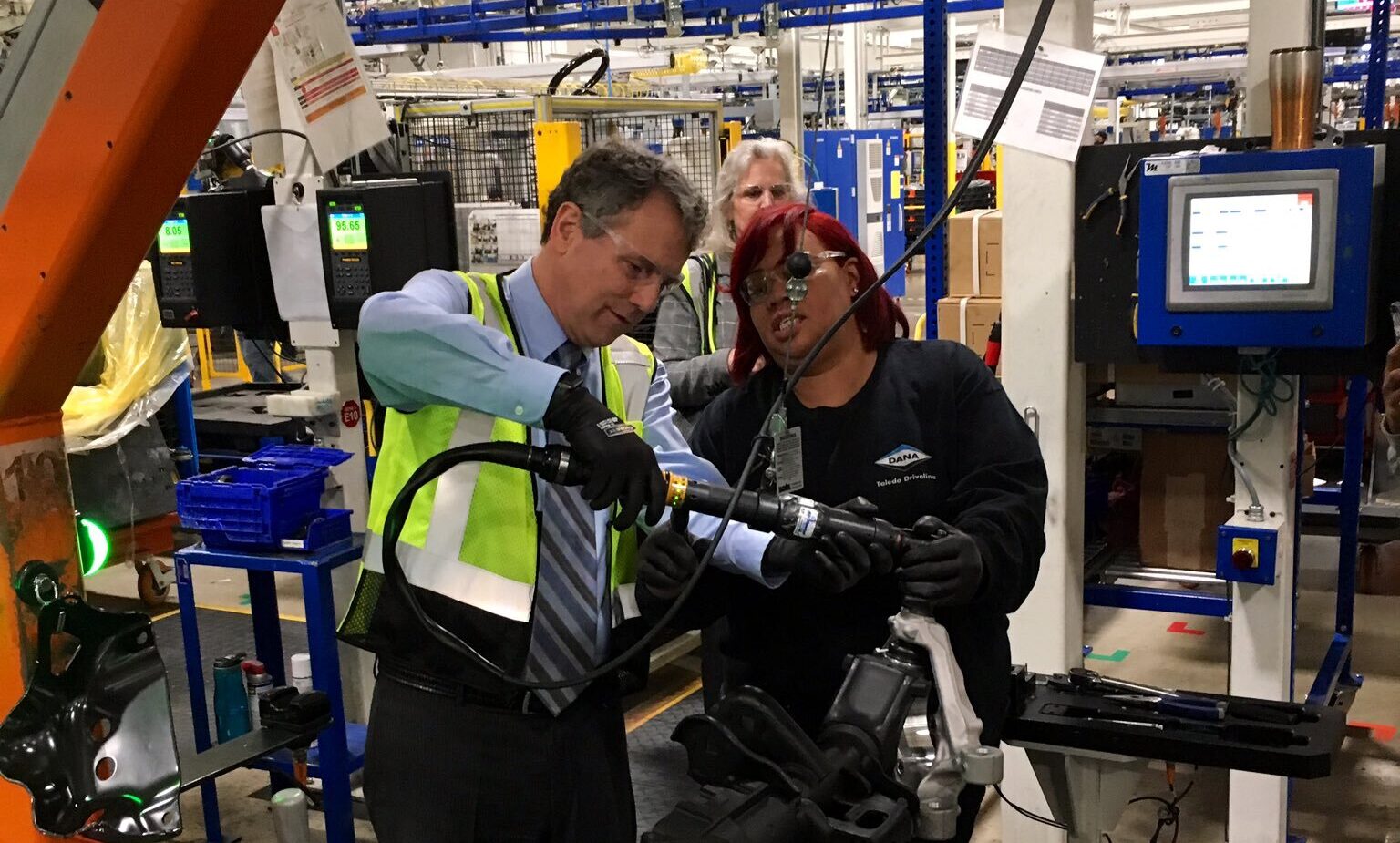
Mansfield was a town built on steel, rubber, and sweat. Brown, though privileged, was no stranger to its grit. When local Democratic leaders asked him to run for the Ohio legislature while still in college, he knew he needed credibility outside his upbringing. So he pulled up chairs in union halls, listening to men with grease-stained hands and women who worked double shifts.
“He spent a lot of time with us,” remembered Ron Davis, a former steelworkers local president. “That’s how he learned what mattered.”
The young man from Yale wasn’t there to talk. He was there to listen.
That instinct—to step into working people’s spaces and let them lead the conversation—would guide him for the next fifty years.
The Reinvention
Half a century later, Brown’s career had taken him through the Ohio legislature, the halls of Congress, and the U.S. Senate. But after losing his Senate seat in 2024, he returned to the same question that had animated his first campaign: whose side are you on?
In March 2025, he unveiled his answer: the Dignity of Work Institute.
This wasn’t a think tank stacked with ivory-tower economists. Brown described it as a workshop for real life, a place where research meets lived experience. “It’s not a one-day story, it’s not a one-month institute,” he said. “We’re going to do this right—and we’re going to do it nationally.”
The Numbers That Can’t Be Ignored
The institute’s first poll painted a bleak picture of American life:
- Six in ten workers hold more than one job.
- One in five has held three jobs at once.
- More than half say they couldn’t cover a $1,000 emergency.
The numbers told a story that crossed party lines. An autoworker in Michigan and a waitress in Alabama might vote differently—but both were stretched to the breaking point.
“Corporate profits soar. Executive pay explodes. Productivity rises. But wages stay flat, and the cost of living keeps climbing,” Brown said. “People can’t keep up, no matter how hard they work.”
It wasn’t rhetoric. It was reality.
Choosing Sides
Brown has always bristled at the left-right labels that dominate politics. He frames things more simply: it’s about sides—who you’re for, and who you’re willing to fight.
The Dignity of Work Institute reflects that. Rather than wading into culture wars, it sticks to “kitchen-table economics”: wages, healthcare, housing. Issues that, according to Pew Research, top the list of voter concerns across the spectrum.
Building the Machine
Behind Brown is a familiar cast: Sarah Benzing, his longtime Senate chief of staff, now serves as senior adviser. Katie Mulhall Quintella, a decade-long veteran of his Senate office, is deputy executive director.
The group is raising money, hiring staff, and laying the foundation for something meant to outlast any single campaign. Still, it doubles as a stage for Brown himself. In August 2025, he announced he’d run for Senate again in 2026. The institute is proof that his message isn’t just campaign branding—it’s his life’s work.
A Blueprint for the Party
For Democrats, the Dignity of Work Institute may be more than one man’s project. It could be a roadmap. The party has struggled to win back working-class voters in factory towns, farm counties, and forgotten zip codes. Brown’s wager is that if Democrats can set aside cultural flashpoints and return to economics, they can reconnect.
“American workers built this country,” he said. “They’re working harder than ever but have less to show for it. They know the system is rigged. And they’re ready for leaders who will fight alongside them.”
Full Circle
From the polished floors of his father’s medical office to the cigarette smoke of Mansfield union halls, Sherrod Brown has followed the same thread: listen to workers, and never stop fighting for them.
Whether the Dignity of Work Institute becomes a permanent fixture or just the platform for his next campaign, it represents the throughline of his career.
The question now isn’t whether Brown will succeed. It’s whether others—especially within his own party—will step out of their comfort zones, sit down at union tables, and listen.
Because Brown learned something fifty years ago that still holds true: the most important conversations in American politics don’t happen on television or in backrooms of power. They happen where people clock in, carry the load, and try to hold their families together.